

Certified to Singapore standards with a 30-year, fully auditable track record in project execution and asset operations, IESASP is a demand-driven systems solutions and operational management enterprise. The firm specializes in resolving core market vulnerabilities in complex operational systems, including efficiency decline, resource misallocation, and systemic degradation. By utilizing its proprietary Energy-Anchored Value Consensus (EAVC) and Primitive–Analogue–Derivative (PAD) frameworks, alongside the Consensus Mosaic Framework (CMF) collaborative architecture, IESASP organizes multi-professional teams, advanced technologies, institutional capital, and operational infrastructure. The company delivers lifecycle implementation spanning demand identification, systems design, project rollout, and long-term asset management, which converts operational performance into quantifiable, verifiable, and bankable financial, energy, and environmental value to establish the foundation of sustainable earnings and development for the market.
Based on IESASP's operating principles, demand is the manifestation of an entropy increase reaching a critical threshold within an operating system. By leveraging the proprietary EAVC (Energy-Anchored Value Consensus) institutional system, the CMF (Consensus Mosaic Framework) architecture, and the PAD (Primal-Analog-Derivative) toolkit, IESASP organizes system inputs (resources and capital) based on this demand. Through providing Services and Maintenance operations, it transforms the entropy within the demand system into highly standardized financial, energy, and environmental assets.
What is Entropy?
Every operating system is built upon predefined inputs, processing mechanisms, and output architectures. In this context, entropy refers to the natural and inevitable degradation over time in how energy and resources are distributed and utilized within that framework. As entropy increases, the system's energy conversion undergoes imperceptible changes at a micro-level. Even if the system continues to run on its default configuration, energy dissipates, leading to a decrease in the system's productive capacity. When this progressive degradation accumulates to the point of system collapse, it triggers the demand for system operations.
For IESASP, fulfilling a demand is the result of entropy reduction. Through systematic intervention, the allocation framework is reorganized, and the system's energy flow is redirected back to its intended, highly efficient configuration.
Based on IESASP's operating principles, demand is the manifestation of an entropy increase reaching a critical threshold within an operating system. By leveraging the proprietary EAVC (Energy-Anchored Value Consensus) institutional system, the CMF (Consensus Mosaic Framework) architecture, and the PAD (Primal-Analog-Derivative) toolkit, IESASP organizes system inputs (resources and capital) based on this demand. Through providing Services and Maintenance operations, it transforms the entropy within the demand system into highly standardized financial, energy, and environmental assets.
01
A consensus institutional regime that uses energy as the underlying anchor and value constraint reference, utilizing measurable energy performance as value collateral. Through the quantified contribution of services and operations, it generates auditable settlement units and forms a public value consensus pricing and clearing mechanism. It uses P-A-D as the unified rating standard and adopts "split-account, multi-stage verification" as the issuance, distribution, and settlement mechanism.
02
A demand-oriented execution methodology. The P phase completes the acquisition of primary original signals and fluctuation trigger values; the A phase completes the establishment of a correlative spatiotemporal knowledge base and information repository; the D phase transforms this energy into capital assets recognizable by the market.
03
A demand-driven tool for acquiring high-density, correlated primary signals (multi-dimensional, mutually verifiable, indivisible, and discontinuous information).
Characteristics of Primary Signals:
04
A correlative spatiotemporal knowledge and information repository built based on demand. It transforms the fluctuation signals triggered in the P phase into standardized analogue benchmarks, providing observable results of the trigger signals and their correlations through traceable, empirically verified logic and knowledge sets.
05
Based on the observation results, it derives the maximum probability value to allocate and organize energy information such as resources and capital. Through services and operations, it transforms them into a series of derivative products possessing legal, financial, and technical attributes.
06
The organizational engine that translates logic into reality. It employs a decentralized, horizontal division-of-labor architecture based on the EAVC system. Each professional sector operates independently but integrates seamlessly under the unified logic of EAVC.
2020 Open Water System Systemic Entropy Reduction and Asset Transformation Project Demand: To execute entropy reduction within a designated water body scope to meet statutory surface water quality standards. IESASP Team's Entropy Reduction Objective: Upon completion of the entropy reduction, ensure the continuous, ordered output of the water body system for 2-3 years.
Utilizing the Demand-Driven Primary Situational Awareness Tool (P) kit to perceive spatial, wind, water, soil, biological, and light signals associated with the demand, thereby acquiring multi-dimensional, mutually verifiable, indivisible, and discontinuous Primal Signals.
[GIS Scanning (Space), Digital Dock (Wind, Water, Soil, Light), Radar (Biological) Reports]
The fluctuating primary signals trigger the Demand-Driven Analogue Information Repository (A). By utilizing the correlative spatiotemporal knowledge and information repository, the system's entropy and its correlations are observed, transforming fluctuations into traceable, empirically verified relational logic results.
[Ecological Scientific Review Group Standard Disclosure Document, Dongbian observe mapping]
Aligning the observation results with the EAVC regime, the Demand-Relational Derivative (D) generates the management compliance framework, professional team structure, materials, equipment, facilities, budgets, and cost-profit accounting required for the entropy reduction.
[Dongbian Mind Map, Implementation Plan, Cost Accounting Sheet, Personnel Management Schedule]
The decentralized Consensus Mosaic Framework (CMF) alliance reifies the derived plans into real-world contracts. Through a decentralized, horizontal division of labor architecture, it assembles legal, financial, scientific, engineering, implementation, and operational professional teams, maintaining independence in their respective fields to provide design, testing, and prototype manufacturing tailored to their specialized domains.
[Design Blueprints, Testing Reports, Work Orders, Settlement Certificates]
The alliance assembled by the CMF, based on the implementation services derived from the Demand-Relational Derivative (D), executes entropy reduction processes on high-entropy components that exceed the system's processing capacity, utilizing equipment and facilities designed by the professional teams.
[Ecological Scientific Review Group Standard - Chlorophyll-a Correlation Page, Light Correlation Page, Primary Comprehensive Application Case - Application Facilities]
Through O&M derived from the Demand-Relational Derivative (D) by the CMF alliance, the unattended edge modules derived from the P-A-D toolkit autonomously invoke the equipment and facilities designed by professional teams in response to demand. In a state of zero human intervention, they progressively assist the system in increasing its entropy processing rate and managing sudden systemic entropy spikes.
[March 21, 2020 Dongbianyong Emergency O&M Report]
Completed the activation closed-loop of the full-cycle systemic ecological assets ("Energy-Value") of the water system. All acceptance criteria met standard requirements; the demand was fulfilled.
Financial Assets
Energy Assets
Full-cycle power consumption—encompassing services, operations and maintenance (O&M), and computing—accounted for 5% of total costs.
Environmental Assets
Others
The case was reported by the host nation's premier authoritative media outlets
Singapore's unique geographical constraints and limited natural resources have fostered an environment strictly anchored in the rule of law, information density, and resource efficiency. This establishes a structural demand for a "high-quality, high-density, high-output" model, which perfectly aligns with IESASP's demand-driven, systemic entropy reduction operations and our vision of establishing and promoting the NOD future habitat space.
NOD (Negentropic Order Domain): NOD is a future habitat space supported and realized by the EAVC standard, the P-A-D toolkit, and the CMF alliance. It maintains the low-entropy operation of a closed-loop ecology by fully integrating all systems: multiple subsystems operate interdependently based on demand and EAVC. The system degradation (or entropy) generated by one subsystem serves directly as the energy input for another, seamlessly connecting all systems into a highly efficient, autonomous habitat space.
What IESASP is Currently Implementing:
Over the past 30 years of accumulated experience, the IESASP team has achieved the experimentation, implementation, and practical application of the NOD future habitat space, successfully completing its small-scale operation.
Core Strategic Expansion: IESASP's Potential Demand Territories
Real projects. Real demands. Organized and governed through the EAVC standard.
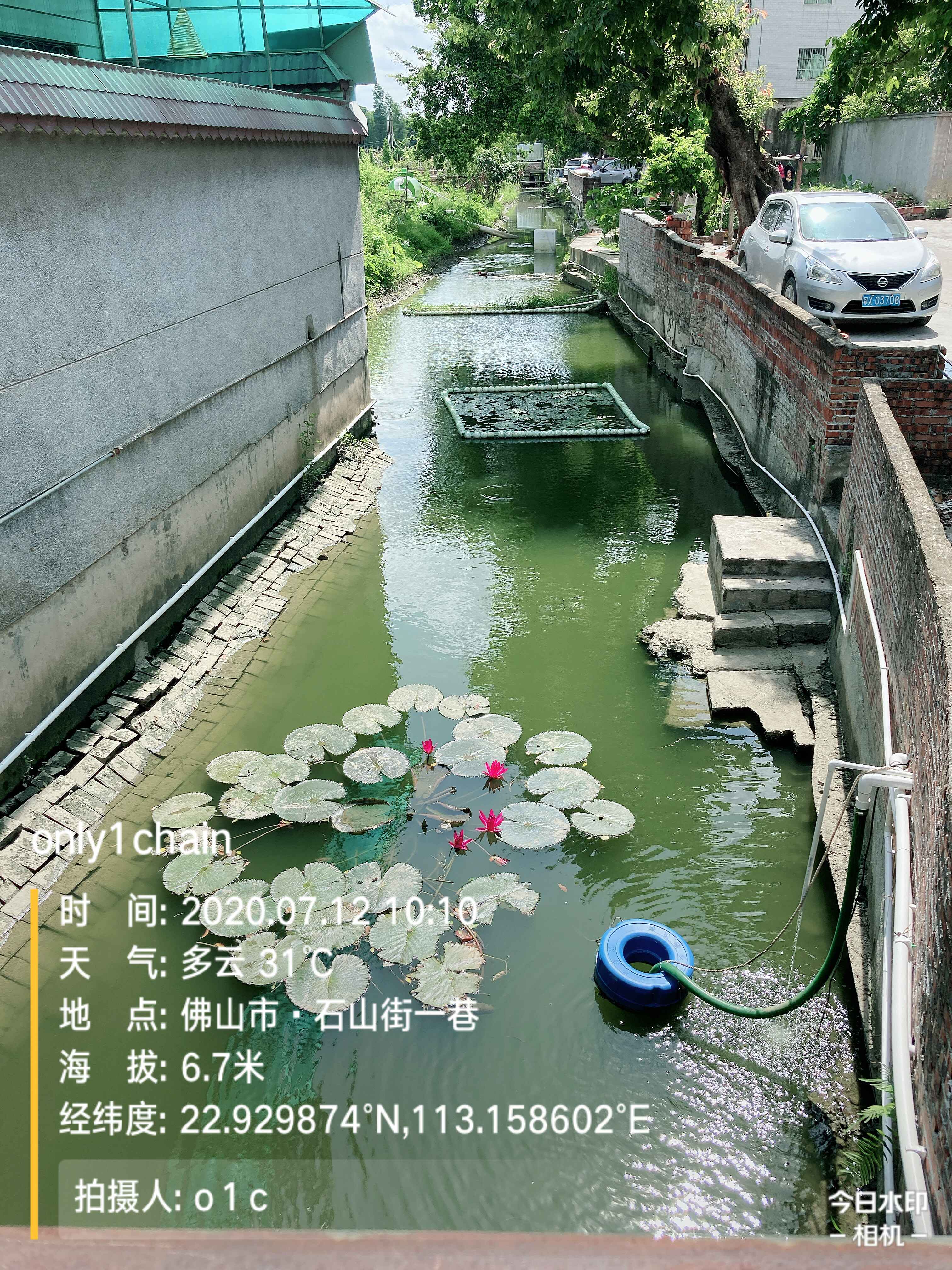
Water environment restoration and long-term operations & maintenance for the Dongbian River (Dongbian Yong), Guangdong — organized under the EAVC standard using the PAD methodology and CMM specialist coordination. Financial deviation from derived cost calculation: 0.77%. Confirmed stable water environment conditions in 2023 and 2025 follow-up reports.

A post-industrial city prototype organized under EAVC — integrating spatial sensing, energy systems, water management, air quality, nutritional supply chains, and waste-to-value cycles into a self-sustaining three-person household unit. Designed as the blueprint for post-industrial urban upgrading.
IESASP's EAVC-based organizing model is designed for requirements to fulfill, investors seeking ESG-compliant project structures, and organizations with resource management demands that require organized specialist teams and long-term O&M. If you have a demand, IESASP organizes the rest.


