
IESASP Logo
IESASP
Demand-Driven NOD (Negentropic Order Domain) Future Habitat Space
Case Studies

Demand-Driven NOD (Negentropic Order Domain) Future Habitat Space

Ongoing
Foundation · Water · Energy

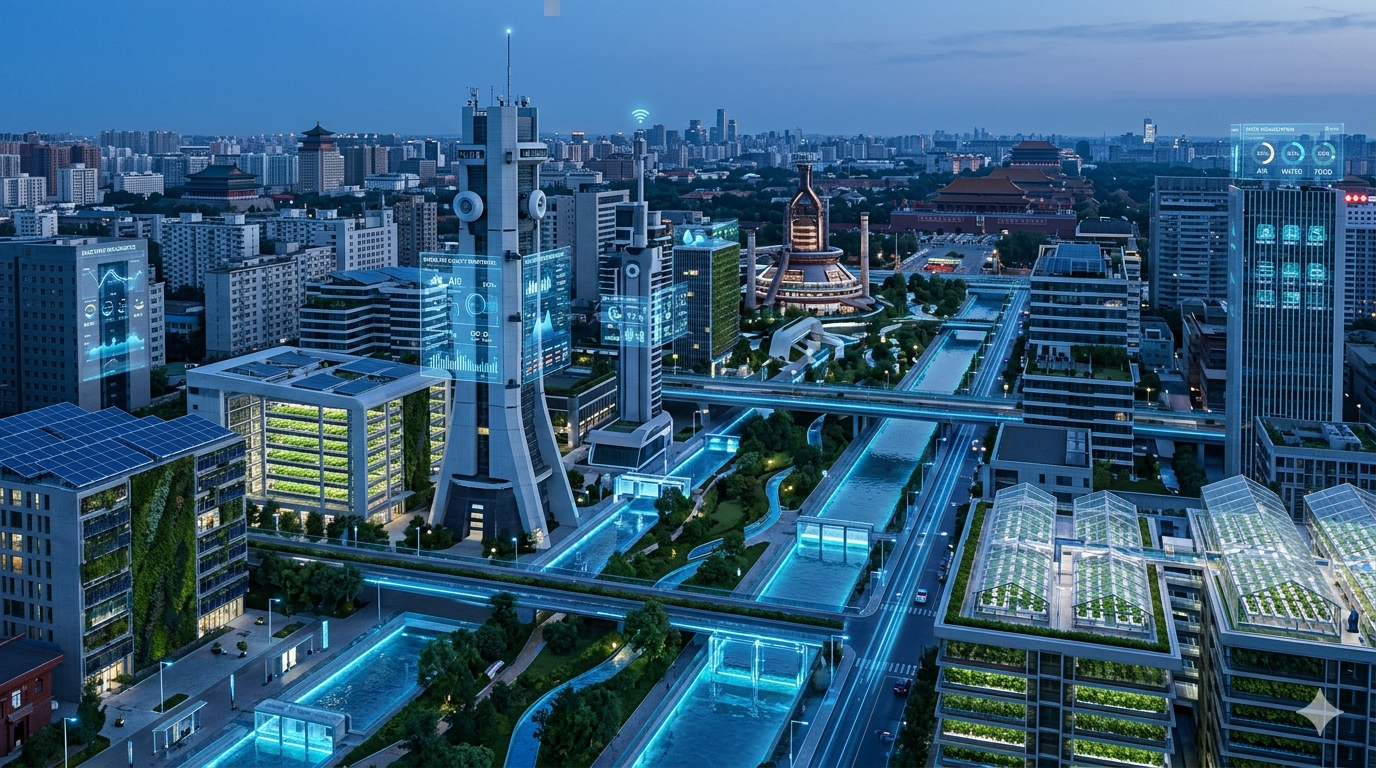
A post-industrial city prototype organized under EAVC — integrating spatial sensing, energy systems, water management, air quality, nutritional supply chains, and waste-to-value cycles into a self-sustaining three-person household unit. Designed as the blueprint for post-industrial urban upgrading.

24hours
Minimum Off-Grid Operation
4
EAVC Layers Organized
The Demand

The Demand

The Demand-Driven NOD (Negentropic Order Domain) Future Habitat Space Project addresses the full spectrum of post-industrial urban demands across all EAVC layers:

Foundation Layer (space): CO₂ (Carbon Dioxide), O₂ (Oxygen)

Flow Layer (liquid): NH₃–N (Ammonia Nitrogen)

Flow Layer (wind): CO₂ (Carbon Dioxide)

Flow Layer (light): Radiance

Power Layer (energia ordinata): Phosphorus (P), Nitrogen (N)

Power Layer (chaos/entropia): Phosphorus (P), Nitrogen (N)

How IESASP Organized the Solution

How IESASP Organized the Solution

① P — Primal Perception:

a) Spatial sensing of “Future Living” — air, wind, water, soil, plants, animals, nutrients

b) Aerial remote sensing to acquire GIS features

② A — Analogy: Established a spatiotemporal correlation knowledge base and information database for “Future Living,” integrated with EAVC (Energy Anchored Value Consensus)

③ D — Derivative: Framework for the “Future Living” solution

④ Integration based on D — Mosaic specialist team:

a) Energy systems specialists

b) Architectural design specialists

c) Materials specialists

d) Electronics and information specialists

e) Microbial cultivation specialists

f) Certified testing laboratories (with statutory qualifications)

⑤ Mosaic horizontal division of labour — deliverables:

a) PCM system design, material testing, and application: work report

b) Modular structural block design and prototype development: work report and drawings

c) Design and testing of natural adsorption layers for walls and floors: work report

d) Testing and integration with digital dock and articulated modules: work report

e) Underground water storage structure: work reports and drawings

f) High-capacity underground water storage layer based on A-design: storm response work reports

g) Design and testing of water supply and drainage systems: work reports and drawings

h) Airflow and ventilation system design: work reports and drawings

i) Energy storage system and air system (cooling and heating): testing work reports

j) Solar energy aggregation and storage: testing work reports

k) Energy matrix system design: work reports and drawings

l) Eutrophic bio-sphere formulation testing: work reports

m) Microbial culture testing: work reports and drawings

n) Provision of material testing reports and system testing reports: test reports

Comfort Operations & Maintenance

Comfort Operations & Maintenance

① P — Primal Perception: Information sensing for “Future Living”

② A — Analogy: Established spatiotemporal correlation knowledge base for residents, integrated with EAVC, continuously updated based on residents’ lifestyle patterns and nutritional status

③ D — Derivative — Comfort Operations & Maintenance:

a) Unattended articulated-module operations, adjusting temperature and humidity: warm air (26°C), cool air (20°C)

b) Remove excess indoor furniture to maximise usable living space

c) Nutritional supply chain: in-house planting and breeding areas to meet the animal and plant protein needs of a three-person household

d) High natural carrying capacity: under heavy rainfall conditions (precipitation mm × hours), no surface overflow and no indoor flooding; maintain normal water supply at −5°C with no pipeline abnormalities

e) Unattended airflow, wind speed, and temperature adjustment based on EAVC-driven nutritional needs and comfort requirements

f) Under limited solar irradiance and without reliance on external power grids, support normal operation for at least 24 hours through the energy storage system

g) Nutritional intake chain: convert nutrient value from waste output of nine young goats into usable nutrients through eutrophic bio-spheres, supporting cultivation of plant proteins (mulberry leaves, wheat)

h) All living-generated waste flows into multi-stage sedimentation system; converted to eutrophic bio-spheres and reintroduced into the nutrient cycle

Results & Impact

Results & Impact

Full prototype delivered across four EAVC layers — Foundation, Flow, Power, and Control. All systems documented through work reports, testing reports, and drawings. Prototype demonstrates feasibility of post-industrial urban upgrading at household scale.

Interested in this approach?

IESASP is actively seeking municipal partners, developers, and institutional investors for integrated ecological projects.

Get in Touch